
Author: Dr Sakthi Kanimozhi K , MBBS MS (ENT), Senior Resident , Department of ENT & HNS, BGS Medical College & Hospital.
Ear infections are one of the most common health problems seen in infants and young children. Among them, Acute Suppurative Otitis Media (ASOM) is particularly distressing—for babies and parents alike.
While colds and infections are well-known causes, one lesser-known but important factor is improper breastfeeding position. Understanding this connection can help parents prevent repeated ear infections and discomfort in their little ones.

What Is ASOM?
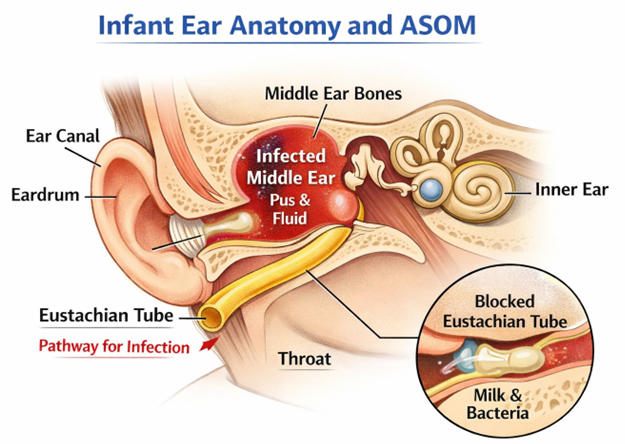
Acute Suppurative Otitis Media (ASOM) is an acute infection of the middle ear, often involving pus formation. It commonly affects infants due to the structure of their ears.
Common symptoms include:
-
Ear pain and irritability
-
Fever
-
Ear discharge (if the eardrum ruptures)
-
Reduced hearing
-
Restlessness during feeding or sleep
ASOM develops when bacteria or viruses enter the middle ear through the Eustachian tube, a small passage connecting the throat to the middle ear.
How Improper Breastfeeding Can Contribute to ASOM
1. Milk Flow into the Eustachian Tube
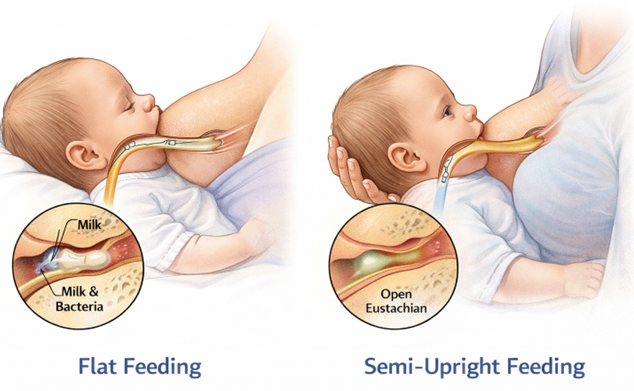
When babies are breastfed in a fully horizontal position, milk can flow backward into the throat. Since an infant’s Eustachian tube is shorter, wider, and more horizontal than an adult’s, milk or secretions can easily reach the middle ear.
This may lead to:
-
Inflammation
-
Tube blockage
-
Bacterial growth
-
Ear infection
2. Improper Latch and Swallowing Difficulties
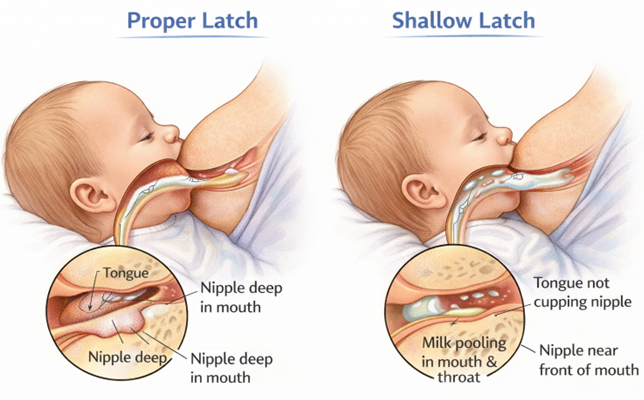
A shallow latch or poor swallowing coordination can cause:
-
Milk pooling in the mouth and throat
-
Increased chances of milk entering the Eustachian tube
-
Repeated irritation and infection risk
Over time, this significantly raises the likelihood of ASOM.
3. Reduced Natural Protective Mechanisms
Awkward or uncomfortable feeding positions may:
-
Reduce effective sucking
-
Interfere with smooth milk flow
-
Increase nasal and throat secretions
All of these can contribute to Eustachian tube blockage, setting the stage for infection.
Signs Your Baby May Be Developing ASOM
Early recognition is key. Watch for:
-
Tugging or rubbing the ears
-
Excessive crying or irritability
-
Poor sleep
-
Fever
-
Fluid or pus discharge from the ear
-
Feeding refusal (due to pain while swallowing)
Preventing ASOM Through Proper Breastfeeding Practices
1. Keep Your Baby’s Head Elevated
Choose a semi-upright feeding position:
-
Baby’s head higher than the stomach
-
Face turned toward the breast
-
Avoid feeding while the baby is lying flat
2. Ensure a Proper Latch
A deep latch helps:
-
Smooth milk flow
-
Less air swallowing
-
Reduced milk pooling in the throat

3. Avoid Overfeeding or Force Feeding
Let your baby control the pace. Force feeding can increase reflux, which may contribute to ear infections.
4. Burp Your Baby After Every Feed
Burping helps reduce:
-
Milk reflux
-
Pressure buildup affecting the middle ear
5. Maintain Good Nasal Hygiene
Blocked nasal passages can worsen Eustachian tube obstruction—especially during colds. Gently clean the nose when required.
6. Practice Exclusive Breastfeeding for the First 6 Months
Breast milk contains powerful antibodies that protect against infections, including ear infections.
When Should You Seek Medical Help?
Consult a healthcare professional if:
-
Symptoms last longer than 24 hours
-
Your baby develops fever
-
There is ear discharge
-
The baby becomes unusually lethargic or inconsolable
Early treatment can prevent complications and hearing problems.
ASOM is common in infants—but many feeding-related cases are preventable. Proper breastfeeding position, a good latch, and simple feeding hygiene practices can significantly reduce the risk of middle-ear infections.
By keeping your baby comfortable, semi-upright, and well-supported during feeds, you’re not only improving nutrition—but also protecting their ears, comfort, and overall well-being.
💙 A small change in feeding posture can make a big difference in your baby’s health.

